





Why Choose Conservatory Doors for Your Home?
A conservatory can feel like a bright retreat on a clear morning, yet drafty doors may make it uncomfortable by afternoon. Choosing suitable conservatory doors can improve access, light, and the connection between the room and garden. The best option depends on the conservatory’s design, how the space is used, and the home’s existing insulation. There is no single right answer.
Look closely at the details. Clear glass can preserve garden views, while suitable glazing may help manage heat loss and glare. Frame material, seals, locks, and the quality of installation also affect everyday performance. That matters. A door that looks elegant in a showroom may feel heavy or awkward in a busy household. Even small features, such as a low threshold or a handle that is easy to reach, can make a difference.
Timber, aluminium, and uPVC each bring different costs, maintenance needs, and visual styles. Their performance varies by product, so compare specifications rather than relying on material names alone. Check how the doors open, how much space they need, and whether their finish suits the rest of the home. Ask a qualified installer to assess the opening and explain relevant ratings, warranties, and fitting requirements. Good advice helps. It is also worth admitting that no door solves every comfort problem; ventilation, shading, and the conservatory’s overall construction play a part too.
What Defines a Conservatory Door and Its Main Configurations
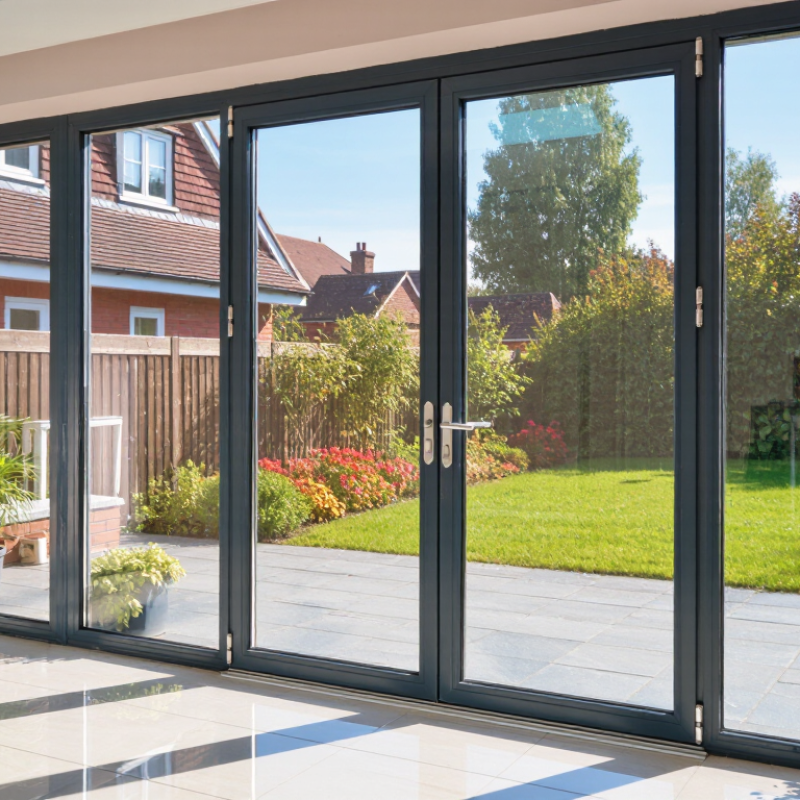
A conservatory door is the glazed or partly glazed entrance connecting a conservatory to the garden, or separating it from the main house. Its frame, glass, seals, threshold, and opening mechanism all affect comfort. It is not just a larger window: people use it often, and its threshold must handle foot traffic, rain, and changing floor levels.
Common configurations include hinged French doors, sliding doors, and folding multi-panel doors. French doors open in or out and need clear swing space. Sliding panels save that space, though one panel usually remains fixed. Folding doors create a wide opening, but their tracks need careful cleaning. Details matter. The U.S. Department of Energy’s Energy Saver guidance estimates that windows account for 25–30% of residential heating and cooling energy use; this figure is not specific to doors, but it highlights the importance of well-performing glazing. The National Fenestration Rating Council rates products by U-factor and solar heat gain coefficient, useful measures when comparing heat flow and sunlight transmission. A low U-factor alone does not guarantee comfort. Orientation, shading, installation, and draught sealing matter too. That last detail is easy to overlook.
Why Choose Conservatory Doors for Your Home? - What Defines a Conservatory Door and Its Main Configurations
| Door type or feature | What it is | How it opens | Space and opening | Typical benefits | Points to consider |
|---|---|---|---|---|---|
| Conservatory door | A glazed door used as an entrance to or from a conservatory. It may connect the room to a garden, patio, or the main house. | Operation depends on the chosen configuration: hinged, sliding, or folding. | Size and layout depend on the available wall opening and how the room is used. | Can provide access, daylight, and a visual connection between indoor and outdoor spaces. | Choose a configuration that suits the opening, circulation space, weather exposure, and required level of security. |
| Single hinged door | One door leaf mounted on hinges in a frame. | Swings inward or outward around one side hinge. | Needs clear space on the side toward which it swings. | Simple operation and a familiar layout; suitable where a standard-width entrance is sufficient. | Furniture, paths, or garden features should not obstruct the swing area. |
| French doors | A pair of hinged door leaves fitted side by side. | One or both leaves can open, depending on the hardware and configuration. | Creates a wider passage when both leaves are open, but requires swing clearance. | Offers a broad opening and a balanced, symmetrical appearance. | Check that there is enough clear space on the opening side and confirm how the secondary leaf is secured. |
| Sliding patio doors | Two or more glazed panels arranged so that one or more move along tracks. | Panels slide horizontally past one another; they do not swing into the room or garden. | Requires little swing clearance, although part of the framed opening remains covered by stacked panels. | Useful where space beside the doorway is limited and a wide glazed area is wanted. | Track cleanliness and smooth panel movement matter; compare the clear opening with the overall frame width. |
| Bifold doors | A set of connected panels designed to fold together at one or both sides. | Panels fold and stack to the side when opened. | Can create a wide opening, but needs room for the folded panels and suitable track space. | Allows a large proportion of the opening to be clear when fully folded back. | Consider the panel stacking position, threshold detail, and space needed for the panels to fold. |
| Glazing and safety | Door glazing may use toughened or laminated safety glass where required by the applicable regulations and location. | Not applicable; glazing specification is separate from the opening style. | Requirements can depend on the glass location, door design, and local building rules. | Appropriately specified glazing supports safe use and helps meet relevant requirements. | Confirm the specification with a qualified installer and check local building regulations before ordering. |
The best configuration depends on the available opening, clearance, access needs, and project requirements. Performance and compliance vary by product and installation.
Related Posts
-
Innovative Conservatory Doors Set to Transform Market Trends at 2025 China Import and Export Fair
-
Top 10 Conservatory Doors That Enhance Your Home's Natural Light
-

Why Choosing Conservatory Doors Can Transform Your Home Space
-
The Ultimate Guide to Choosing the Best Conservatory Doors for Your Home?
-
2026 Top Types of French Windows and Doors for Global Buyers
-
Why Choose UPVC Windows and Doors for Your Home?