


Who Are the Top UPVC French Door Suppliers in China?

Choosing among China’s leading suppliers requires more than comparing catalogue photos or quoted prices. Buyers sourcing upvc french doors should examine frame design, glazing options, hardware, production controls, and documented project experience. Small details matter: a meeting stile that closes evenly, smooth multi-point locks, and consistent welds can reveal more than a polished showroom image.

There is a practical reason to assess performance carefully. The 2023 Global Status Report for Buildings and Construction, published by UNEP and the Global Alliance for Buildings and Construction, estimates that buildings and construction accounted for 34% of global energy demand and 37% of energy- and process-related CO₂ emissions in 2022. These figures describe the wider sector, not the impact of French doors alone. Still, they underline why thermal performance and installation quality deserve attention.

This guide compares Chinese suppliers through verifiable indicators: product specifications, quality certifications, export experience, customization options, and responsiveness during sampling. Ask for test reports tied to the exact door configuration, not just a general company brochure. A detailed specification should identify profile dimensions, glazing build-up, seals, and hardware. That sounds obvious, but comparisons often miss it.

There is no universally accepted public ranking of China’s UPVC French door manufacturers. Supplier claims also vary in detail. So this overview treats “top” as a practical shortlist, not a guarantee. Buyers should confirm current credentials, inspect samples, and verify project references before placing an order.
Who Are the Top UPVC French Door Suppliers in China?

What Are UPVC French Doors and How Are They Used?

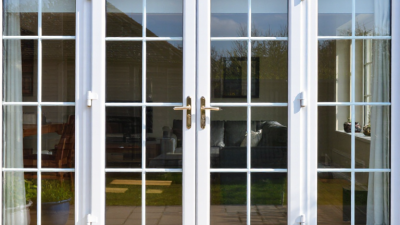
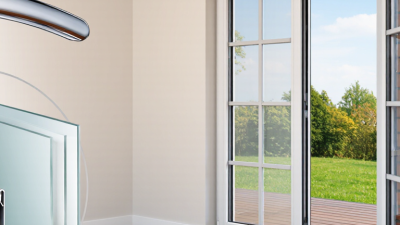
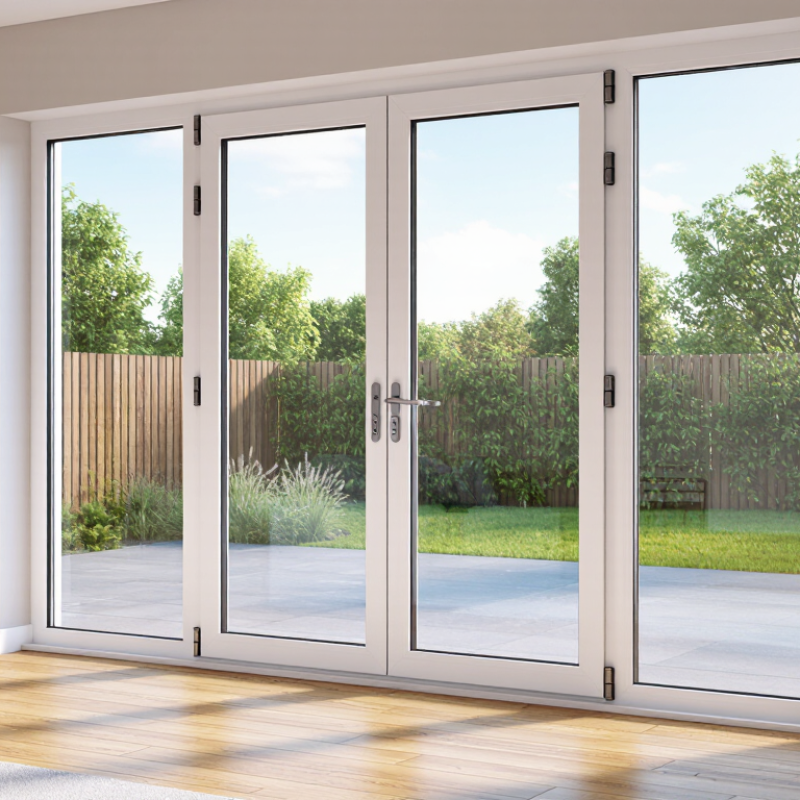
UPVC French doors are a pair of hinged doors made with unplasticized polyvinyl chloride frames. Both panels usually open from the center, creating a wide passage and a clear view outdoors. Glazed panels bring daylight into a room, while frame profiles and seals help reduce drafts when correctly specified and installed. They suit patios, gardens, balconies, and rooms that connect to outdoor living areas. A white finish is common, but other colors and glazing options may be available.

In daily use, both doors can open for moving furniture or welcoming guests outside. One panel can often stay closed during ordinary use, which is convenient in smaller spaces. Their practical performance depends on more than the frame material. Check the locking points, drainage paths, glass specification, and weather seals before choosing a set. Installation matters, too; even a well-made door may leak or stick if the opening is poorly measured. And no door is maintenance-free. Hinges and tracks still need occasional checks.

Tips: Measure the opening carefully and ask how the doors will perform in your local climate. Inspect sample corners, seals, and hardware in person when possible. A slightly awkward detail can be easy to miss in a brochure.

How Is China’s UPVC French Door Supplier Market Organized?

China’s UPVC French door market is not a single factory network. It is organized around profile and hardware suppliers, door fabricators, and export-oriented trading or project firms. Profile makers supply extrusions, while fabricators cut, weld, glaze, and assemble the paired doors. Export firms may coordinate drawings, packaging, and shipping, but they do not always manufacture the product themselves. Ask who controls each step.

Demand is shaped partly by construction activity. The National Bureau of Statistics of China reported that newly started building floor space reached 953.7 million square metres in 2023, down 20.4% year on year; completed floor space fell 17.0%, to 998.3 million square metres. These figures describe the wider building market, not UPVC doors specifically. Still, they help explain why suppliers may differ in capacity, lead times, and willingness to customize. A small fabricator can offer practical flexibility, while a larger operation may handle repeat orders more consistently. Neither size alone proves quality.

For buyers, compare suppliers by checking whether they make the frames in-house, document glass and hardware specifications, and provide measured samples or drawings before production. Details matter: French doors need aligned meeting stiles, stable hinges, and smooth locking across both leaves. Some supplier listings blur trading and manufacturing roles. That distinction is easy to miss. Verify it directly, and treat any market estimate without a stated scope cautiously.

Who Are the Top UPVC French Door Suppliers in China? - How Is China’s UPVC French Door Supplier Market Organized?

Supplier Segment Role in the Supply Chain Typical Products or Services Common Buyer Type What to Evaluate
Finished-door manufacturers Fabricate complete French door units from profiles, glazing, hardware, and accessories; some also manage design and export coordination. Made-to-order door frames and sashes, glazing options, hardware installation, packaging, and project documentation. Importers, builders, contractors, window-and-door dealers, and renovation companies. Documented product specifications, dimensional accuracy, finish quality, production capacity, packaging, and ability to meet destination-market requirements.
OEM and ODM manufacturers Produce doors to a buyer’s drawings or provide design support and configurable product specifications. Private-label production, custom dimensions, hardware configurations, glazing choices, and product adaptation for different markets. Distributors, private-label sellers, and construction product brands. Drawing review process, sample approval, change control, ownership of tooling or designs, and consistency between samples and production batches.
UPVC profile extruders Supply the extruded frame and sash profiles used by door fabricators; some systems include coordinated reinforcement and accessories. Frame and sash profiles, glazing beads, gaskets, reinforcement options, and compatible profile-system components. Door and window fabricators, assemblers, and larger project manufacturers. Profile-system compatibility, dimensional tolerances, material specifications, weathering performance documentation, and availability of replacement components.
Hardware and accessory suppliers Provide the operating and closing components fitted to French doors, either directly to fabricators or through door manufacturers. Hinges, handles, locks, multipoint locking components, rollers where applicable, and weather seals. Door manufacturers, fabricators, wholesalers, and repair or replacement businesses. Compatibility with the door system, corrosion resistance appropriate to the installation environment, tested operating cycles, and spare-parts availability.
Glass processors and glazing suppliers Cut and process glass units to suit door openings and specified glazing configurations. Single or insulating glass units, safety-glass options where required, spacer systems, and sealed glazing units. Finished-door manufacturers, fabricators, and project contractors. Glass build-up, safety requirements, unit dimensions, edge quality, seal integrity, and compliance documentation for the destination market.
Regional fabricators and assemblers Cut, weld, assemble, glaze, and finish doors using purchased profiles and components; supply may be focused on local or export orders. Configured door units, project-specific assembly, installation accessories, and order-based fabrication. Local dealers, builders, renovation contractors, and export buyers seeking finished products. Factory quality-control procedures, measurement and assembly tolerances, glazing practices, production lead times, and inspection access.
Export agents and trading companies Coordinate sourcing, quotations, order communication, documentation, and shipping across one or more factories. Supplier coordination, consolidated purchasing, export paperwork, logistics support, and order follow-up. Overseas buyers who need sourcing or export coordination. Clarity about the actual manufacturer, responsibility for quality issues, product traceability, payment terms, and the scope of logistics services.
Distributors and project suppliers Resell or coordinate door products for regional markets and construction projects; may source from several manufacturers. Product selection, local stock or project supply, delivery coordination, and sometimes installation support. Builders, developers, contractors, dealers, and property owners. Local product suitability, availability, warranty administration, installation support, and access to replacement parts.

Market overview: China’s UPVC French door supply chain generally combines profile and component suppliers with fabricators, finished-door manufacturers, and export or distribution intermediaries. Supplier rankings vary by product specification, order size, destination-market requirements, and project needs; this table describes market roles rather than naming or ranking individual companies.

Which Chinese Suppliers Are Notable for UPVC French Doors?

Notable Chinese uPVC French-door suppliers are best judged by documented performance, not showroom polish. Manufacturers in Guangdong, Zhejiang, and Shandong commonly offer double-opening doors, custom glazing, and hardware options. Ask for test reports covering the complete assembled door, including frame, seals, glass, and locking points. Frame-only figures are not enough. The IEA’s 2023 Buildings tracking report estimates that buildings used about 30% of global final energy in 2022. That makes verified thermal performance relevant, especially where heating or cooling costs matter. Compare the declared U-value, air leakage, and water resistance under the same test conditions.

Reliable suppliers provide clear profiles, installation drawings, warranty terms, and traceable production details. Request photographs of corner welds and drainage slots; these small details can reveal uneven finishing. Ask whether replacement hinges and seals remain available after delivery. A factory audit or live video inspection can help verify machinery and quality checks, but it cannot replace independent testing. Details matter. One caution: a polished sample can flatter a product, while poor installation may undermine its performance. Supplier comparisons should therefore include packaging, lead time, export experience, and a written process for handling damaged units.

How Do UPVC French Door Suppliers Compare in Quality and Services?

When comparing UPVC French door suppliers in China, look beyond profile color and quoted price. Ask for cross-section drawings showing wall thickness, steel reinforcement, drainage paths, and corner-weld details. Request independent test reports for air leakage, water penetration, and structural performance. The U.S. Department of Energy’s Energy Saver guidance estimates that windows can account for 25–30% of home heating and cooling energy use. That figure is not a door-specific guarantee, but it shows why verified glazing and airtightness matter. A low quote means little if the seals flatten or the meeting stile leaks after installation.

Service quality is visible in the details. Compare hardware specifications, spare-parts availability, packaging, lead times, and written warranty exclusions. Ask whether the supplier checks opening direction, sill height, and local wind exposure before production. For export orders, confirm who handles installation guidance and claims across time zones. A polished sample is useful, but it cannot replace batch inspection. Even good suppliers can miss small defects.

Tips: Request a recent test report tied to the exact door configuration, not a similar model. Check glass makeup, locking points, and gasket continuity on a physical sample. Ask for installation drawings and a named service contact. If answers stay vague, pause. I would also inspect one finished unit before approving a large run; this adds effort, but can reveal issues photos conceal.

What Should Buyers Consider When Choosing a Supplier?

When comparing UPVC French door suppliers, look beyond catalogue photos. UNEP’s 2023 Global Status Report for Buildings and Construction estimates that the sector used 34% of global energy and produced 37% of energy- and process-related carbon emissions in 2022. The IEA’s 2023 tracking puts building operations at 30% of global final energy use; its accounting boundary differs. These figures make thermal performance worth checking, not merely advertising.

Request complete test reports for the exact door configuration, including glazing, frame, and hardware. Ask whether results cover heat transfer, air leakage, water resistance, and wind load. A certificate for a similar model proves little.

Inspect details you can verify. Check profile wall thickness, reinforcement, drainage openings, gasket continuity, and corner joints. Ask for production tolerances, batch inspection records, sample approval, packaging methods, and written warranty terms. Clarify whether the supplier supports installation guidance and spare hardware after delivery.

Small details matter. A low quoted price may omit packaging or testing costs; compare like-for-like specifications before deciding. I would also ask for a recent production sample, because one imperfect weld or poorly aligned hinge can undermine a polished product sheet. Test documents should identify the laboratory, test date, specimen size, and applicable method, so an independent reviewer can assess their relevance.