How to Choose UPVC Windows and Doors for Global Sourcing?

Choosing upvc windows and doors for global sourcing requires more than comparing catalogue prices. Buyers must connect product performance with climate, building design, installation practices, and long-term maintenance. A window suitable for a mild coastal city may perform poorly in a region with freezing winters, strong sunlight, or seasonal storms.

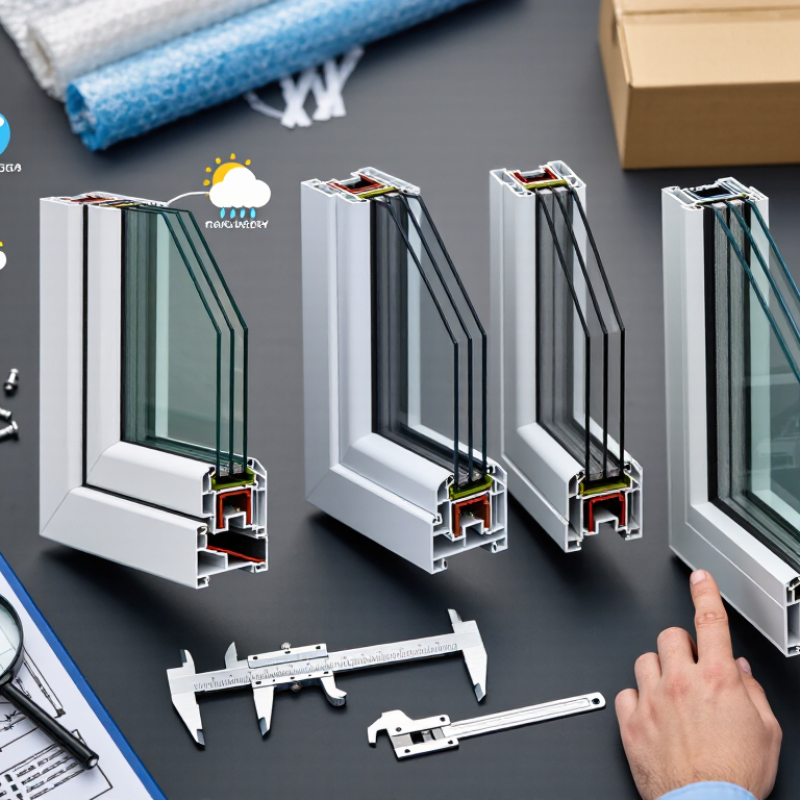
Experienced sourcing teams normally examine profiles, reinforcement, glazing, hardware, drainage, seals, and surface finishes. They also request clear technical drawings, test reports, factory samples, and documented quality procedures. A practical review may include opening and closing sample units repeatedly, checking corner welds, and inspecting whether drainage holes are correctly positioned. Small details often reveal larger production risks.

Supplier reliability matters as much as product specification. Buyers should assess manufacturing capacity, production consistency, communication speed, packaging methods, and after-sales support. Independent inspections can verify dimensions, color, hardware, glass thickness, and damage before shipment. However, no checklist is perfect. A polished sample can hide weak batch control, while a low price may exclude installation accessories or protective packaging. That assumption can fail.

This guide explains how to compare suppliers, define suitable specifications, estimate total sourcing costs, and reduce avoidable quality problems. It also considers regional performance requirements, delivery planning, documentation, and responsible supplier evaluation. The goal is not to choose the cheapest product. It is to select a dependable solution that fits the project, survives transportation, and performs consistently after installation. When evidence is incomplete, careful buyers should pause, ask sharper questions, and record every decision.

How to Choose UPVC Windows and Doors for Global Sourcing?

Define Project Requirements for UPVC Windows and Doors

How to Choose UPVC Windows and Doors for Global Sourcing?

Define Project Requirements for UPVC Windows and Doors

Clear requirements should come before supplier comparisons. The U.S. Department of Energy reports that windows can cause 25–30% of residential heating and cooling energy use. Therefore, define the climate zone, building orientation, and target U-value before requesting quotations. A coastal project may need corrosion-resistant hardware. A cold project may require triple glazing and warm-edge spacers.

Small details matter. Specify opening sizes, frame chambers, reinforcement thickness, glass composition, air leakage, water tightness, and wind-load resistance. For European projects, EN 14351-1 supports product performance assessment. ISO 10077-1 helps calculate thermal transmittance. Local codes still control final acceptance. Do not assume one specification fits every country.

The European Commission states that buildings consume about 40% of energy in the European Union. This makes energy performance more than a marketing phrase. Create a project matrix with required values, testing methods, tolerances, and documentation. Include color stability, acoustic performance, locking points, packaging, and container loading limits. A sample corner should be inspected before mass production. It may expose weak drainage design or poor welding quality.

My sourcing experience suggests that incomplete drawings create expensive revisions. Sometimes, the first requirement sheet is wrong. Review it with architects, installers, and local inspectors. Leave room for correction before signing the purchase contract.

How to Choose UPVC Windows and Doors for Global Sourcing?

Define project requirements by setting a whole-window thermal performance target before requesting supplier quotations.

The chart shows indicative maximum whole-window U-value targets commonly used in project specifications. Lower U-values indicate better thermal insulation. Final requirements should be confirmed against the building code, climate, glazing configuration, frame design and local energy standards of the destination market.

Compare UPVC Profiles, Glass Types, and Hardware Options

How to Choose UPVC Windows and Doors for Global Sourcing?

Global sourcing should begin with performance, not the lowest quotation. The IEA’s 2023 Global Status Report for Buildings and Construction states that buildings use about 30% of global final energy. Windows influence comfort, cooling demand, and indoor noise. Compare UPVC profiles by wall thickness, chamber layout, reinforcement space, gasket design, and drainage paths. A thicker profile is not automatically better. Check tested U-values and dimensional stability under local temperature changes.

Glass selection must match the climate. The U.S. Department of Energy reports that windows can represent 25–30% of residential heating and cooling energy use. Double glazing may suit moderate regions, while triple glazing can help colder markets. Low-emissivity coatings reduce heat transfer, but low solar heat gain is more valuable in hot climates. Specify U-value, solar heat gain coefficient, visible transmittance, spacer material, and gas filling. Ask for laboratory reports, not attractive sample claims.

Double glazing may suit moderate regions, while triple glazing can help colder markets.

Hardware deserves equal attention. Review hinge load ratings, locking-point strength, corrosion resistance, drainage, and operating-cycle test results. Small parts matter. Stainless or treated components may be necessary near coastal sites. I would avoid choosing hardware by appearance alone; that mistake is easy to make during catalog-based purchasing. Request complete test standards, warranty limits, replacement procedures, and sample inspections before mass production.

One uncomfortable question remains: does the supplier test the finished window, or only individual components?

Check Energy, Safety, and Compliance Standards Across Markets

How to Choose UPVC Windows and Doors for Global Sourcing?

Energy performance changes with climate, glass selection, and installation quality. A low U-value helps in cold regions, but it may increase solar heat indoors. In hot markets, check solar heat gain, shading, and ventilation together. Small details matter. Ask for tested air leakage, water penetration, wind resistance, and acoustic performance. These results should match the intended window size, not only a small laboratory sample.

Safety requirements also vary across markets. Confirm laminated or tempered glass where impact risks are higher. Check multipoint locks, hinge strength, child-safety limits, and emergency opening requirements. Coastal projects need careful attention to corrosion-resistant hardware and drainage paths. I have seen attractive samples fail because drainage holes were blocked by careless fabrication. The profile looked strong. The assembly was not.

Compliance documents must be specific and traceable. Review test reports, material declarations, factory quality records, and batch identification. Do not assume one certificate satisfies every country. Local building codes may set different thermal, fire, accessibility, or wind-load limits. Request samples with the final reinforcement, gasket, glass, and hardware. Then inspect corners, welds, seals, and frame alignment. No checklist is perfect. Supplier claims still need independent verification. A useful improvement is repeating key tests after transport or long storage, because packaging damage and temperature changes can affect performance. Ask again.

Evaluate Global Suppliers, Factory Quality, and Certifications

How to Choose UPVC Windows and Doors for Global Sourcing?

When evaluating global suppliers, begin with factory evidence, not polished catalog photos. Request a live video tour or schedule an independent factory audit. Check extrusion lines, welding equipment, glass processing areas, and finished-product storage. A reliable factory should explain its quality checkpoints clearly. Ask for batch records, incoming-material inspections, and final inspection reports. Small details matter. Look for protected corners, labeled profiles, dry storage, and clean assembly benches.

Factory capability must match your project conditions. Review UPVC profile specifications, steel reinforcement thickness, glazing options, drainage design, and hardware performance. Request samples with the same configuration as your intended order. Test opening force, corner joints, gasket compression, and locking alignment. Ask for reports covering air permeability, water tightness, wind resistance, thermal transmittance, and acoustic performance. Independent laboratory reports are more useful than unsupported claims.

Certifications require careful verification. Confirm the certificate number, issuing body, scope, expiration date, and production site. ISO 9001 can indicate controlled processes, but it does not prove window performance. Market-specific conformity documents and test standards must match the destination country. I have seen suppliers present valid documents for different products or older factory addresses. That is easy to miss. Build a written inspection plan, approve a pre-production sample, and reserve final payment for verified results. Even experienced buyers can overlook packaging strength during rainy-season shipping. That mistake deserves attention.

Plan Pricing, Shipping, Installation, and After-Sales Support

Global sourcing of UPVC windows and doors requires more than comparing the unit price. Ask suppliers for a complete quotation covering profiles, glass, hardware, packaging, testing, and documentation. Calculate the landed cost, including freight, insurance, customs duties, and local handling charges. Exchange rates can change quickly. Leave a reasonable allowance for that risk. Request a production sample before placing a large order. A small sample may reveal color differences, weak seals, or inaccurate dimensions.

Shipping conditions deserve careful attention. Confirm the loading plan, carton protection, container capacity, and moisture control. Large glass panels need stable support, especially during long sea transport. Define responsibility under the agreed delivery terms, and check whether unloading equipment is available at the destination. Installation should match local wall structures, climate, and building requirements. Provide clear drawings, fixing points, drainage details, and adjustment instructions. A previous project taught me that installation gaps were underestimated. The windows arrived correctly, but the openings were not prepared properly.

After-sales support should be measurable, not just promised. Set response times for damaged goods, missing parts, and performance complaints. Ask how replacement hardware, seals, and glass will be supplied after delivery. Keep serial numbers, inspection photos, and installation records for every unit. Remote video support can solve simple adjustment problems, but it cannot replace qualified local technicians. Warranty terms should state coverage, exclusions, claim evidence, and transport responsibility clearly. Some sourcing plans focus too heavily on the purchase price. That approach often creates expensive delays later.

How to Choose UPVC Windows and Doors for Global Sourcing? - Plan Pricing, Shipping, Installation, and After-Sales Support

Sourcing Stage Key Dimension Practical Target or Data Range Why It Matters Verification Method Budget or Planning Note
Product Definition Window and door configuration Casement, tilt-and-turn, sliding, fixed, single door, or French door Opening style affects hardware, ventilation, weather sealing, packing volume, and installation labor. Prepare dimensioned drawings showing opening direction, frame depth, glazing, handles, and drainage positions. Avoid requesting a price from a simple sketch alone; specifications must be comparable.
Product Definition UPVC profile wall thickness Common commercial range: approximately 2.5–3.0 mm for main profile walls Profile design and wall thickness influence rigidity, weld quality, screw retention, and long-term performance. Review technical drawings and verify selected sections against the approved sample. Do not compare wall thickness without also comparing profile geometry and steel reinforcement.
Product Definition Frame depth Typically about 60–88 mm, depending on the system and glazing design Greater system depth can accommodate wider glazing options and may improve thermal and acoustic performance. Confirm frame, sash, mullion, and sill dimensions in the technical schedule. Use the same frame-depth category when comparing quotations.
Thermal Performance Whole-window U-value Approximately 0.8–1.6 W/m²K for many modern double- or triple-glazed systems Lower U-values generally indicate lower heat transfer through the complete installed window. Request a calculation or test report for the complete window, not only the glass center. Local building requirements and climate should determine the minimum acceptable value.
Thermal Performance Insulating glass configuration Double glazing commonly uses two panes; triple glazing uses three panes; low-emissivity coatings and gas fills may be specified. Glass composition affects thermal insulation, solar gain, weight, cost, and shipping risk. Check pane thickness, cavity width, spacer type, coating position, and gas-fill specification. Triple glazing can increase weight and hardware requirements as well as purchase cost.
Weather Resistance Air, water, and wind performance Performance class must meet the destination market’s applicable standard and exposure conditions. Coastal, high-rise, storm-prone, and heavy-rain locations require more demanding performance levels. Request test evidence for the complete window or door assembly and confirm the test size. A test result for a smaller unit may not represent performance of a larger door or window.
Safety Glass safety specification Use tempered or laminated safety glass where required by local regulations, location, and impact risk. Safety glass reduces injury risk in critical areas such as doors, low-level glazing, and sidelights. Identify safety-glass markings and specify safety requirements on every relevant opening schedule. Confirm whether local codes require laminated glass for overhead, security, or hurricane applications.
Hardware Hardware cycle and corrosion resistance Specify the required operating-cycle class and corrosion-resistance level for the destination environment. Hardware quality affects security, ease of operation, maintenance frequency, and service life. Request hardware test documentation, finish details, adjustment instructions, and spare-part availability. Coastal projects generally need stronger corrosion protection than inland residential projects.
Pricing Price basis Compare on the same basis: per unit, per square metre, or complete opening set Different quotation bases can conceal differences in glass, hardware, reinforcement, packaging, and accessories. Use one request-for-quotation form with identical dimensions and inclusions for every quotation. Indicative factory-level UPVC window prices often vary widely, roughly USD 80–350 per unit before delivery.
Pricing Typical cost components Profile, reinforcement, glass, hardware, fabrication, packaging, documentation, freight, duties, installation, and service A low unit price may exclude costs that become significant after production and delivery. Require an itemized quotation with assumptions, exclusions, taxes, and validity period. Keep product cost, logistics cost, and local installation cost in separate budget lines.
Sampling Pre-production sample One representative window or door corner sample plus hardware, glass, color, and accessory samples A sample reveals weld finish, gasket fit, drainage, hardware operation, and actual color better than photographs. Approve a signed sample or controlled reference package before mass production. For large projects, test a complete mock-up including the wall interface and flashing details.
Production Manufacturing lead time Often about 20–45 calendar days after approval, deposit, and final drawings Custom colors, special glass, unusual sizes, and peak-season capacity can extend the schedule. Request a production plan with drawing approval, material booking, fabrication, inspection, and packing dates. Add time for sample approval and corrections; do not treat the factory lead time as the full project schedule.
Quality Control Inspection checkpoints Incoming material inspection, in-process checks, final dimensional inspection, glass check, and packing inspection Early checks reduce the risk of discovering incorrect dimensions or missing accessories after arrival. Use an inspection checklist covering dimensions, diagonals, color, welds, seals, drainage, hardware, glass, and labels. Independent pre-shipment inspection is useful when the buyer cannot visit the production site.
Packing Protection against damage Individual protection, corner guards, separators, moisture control, reinforced crates or pallets, and clear labels Glass breakage, frame scratches, distortion, and water exposure can occur during handling and transit. Approve packing photographs and require a packing list linked to opening numbers. The cheapest packing method is not always the lowest landed-cost option.
Shipping Container utilization Plan by packed cubic volume, frame dimensions, glass weight, crate type, and maximum safe stacking height. Windows are bulky and fragile; poor loading plans can increase freight cost and damage risk. Request a preliminary packing list with package dimensions, gross weight, net weight, and cubic metres. Confirm whether the quotation is based on sea freight, rail, air freight, or multimodal transport.
Shipping Freight planning time Allow approximately 3–10 weeks for international ocean transport and port processes, depending on route. Transit time varies with origin, destination, transshipment, congestion, customs, and inland delivery. Obtain a route-specific schedule from the forwarder and confirm cut-off dates and document requirements. Build contingency time for port delays and customs inspections.
Import Compliance Documents and regulatory review Commercial invoice, packing list, transport document, origin information, product data, and required conformity documents Missing or inconsistent information can delay customs clearance or create unexpected charges. Have the importer, customs broker, and local authority confirm applicable tariff codes and requirements. Tax, duty, certification, and labeling requirements differ by destination country.
Installation Opening measurement tolerance Follow the approved installation guide; allow a controlled fitting gap suitable for the frame and wall construction. Incorrect site measurements can cause rework, poor sealing, or unusable units. Use a pre-installation survey recording width, height, diagonals, sill condition, plumb, level, and substrate. Do not manufacture final sizes from nominal architectural dimensions without a verified survey.
Installation Installation materials Mechanical fixings, packers, compatible sealants, flashing or membranes, drainage provisions, and finishing trims The complete window performance depends on the interface between frame, wall, seal, and drainage path. Require an installation method statement and a sample installed opening before full rollout. Local installers may need materials or tools not included in the factory shipment.
Installation Labor planning Allow roughly 2–6 labor hours per standard opening as an initial planning estimate; site conditions can change this substantially. Access, floor height, removal of existing units, wall condition, and finishing work strongly affect labor time. Obtain a site-specific labor quotation and separate installation from remedial building work. Use mock-up installation to establish realistic productivity before committing to a large crew.
After-Sales Support Warranty structure Separate warranty terms for profiles, insulating glass, hardware, finishes, seals, and installation Different components may have different service lives and warranty exclusions. Obtain written warranty conditions, claim procedures, response times, and evidence requirements. Confirm who pays for replacement parts, labor, customs charges, and return freight.
After-Sales Support Spare-parts package Plan approximately 1–3% spare hardware and consumable parts for larger projects, adjusted for risk and availability. Small components such as handles, rollers, locks, gaskets, and restrictors can stop an otherwise usable unit from operating. Request a numbered spare-parts list with photos, specifications, and replacement instructions. Store spares in a dry, labeled location and maintain a record of units using each part.
After-Sales Support Technical response time Set a target of 1–3 business days for acknowledgement and 5–10 business days for an initial corrective plan. Clear response targets reduce project disruption when defects or adjustment issues occur. Include escalation contacts, remote video support, service forms, and a defect-report template in the contract. A local service partner can reduce downtime when the supplier is overseas.
Total Cost Landed and installed cost Product price + export packing + freight + insurance + duty and tax + customs + inland delivery + installation + contingency The purchase price alone does not show the real cost of completing the project. Build a spreadsheet for low, expected, and high-cost scenarios before selecting a supplier. A contingency allowance of about 5–10% is commonly used for transport, damage, measurement, and installation uncertainty.
Planning ranges are indicative and must be validated against the destination country’s building codes, climate, logistics route, project drawings, and written supplier documentation.