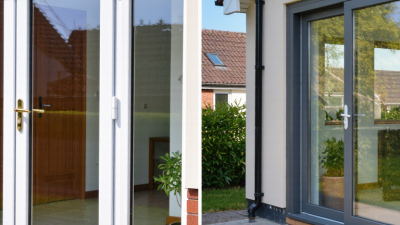



How to Choose UPVC Doors in 2026?

Choosing upvc doors in 2026 means looking beyond colour, price, and a polished showroom display. A door must suit the opening, local climate, and daily use. The European Commission reports that buildings account for about 40% of EU energy consumption and 36% of energy-related greenhouse gas emissions. Those figures describe buildings as a whole, not the savings a new door can guarantee. Still, they show why insulation and careful installation deserve attention.

Check the whole-door U-factor, weather seals, frame construction, glazing, and installation details. Ask for independently verified test results, not just a claim that a product is “energy efficient.” The U.S. Department of Energy estimates that windows account for 25–30% of residential heating and cooling energy use. That figure concerns windows, not doors, so it should not be presented as a door-saving estimate. It does, however, underline the value of checking the performance of glazed panels.

Security and durability matter just as much. Inspect the lock system, hinges, threshold, drainage, and warranty terms. Ask how the finish handles strong sun, rain, and repeated cleaning. Compare like with like: a low quote may exclude fitting, old-frame removal, or finishing work. The brochure may look convincing. The installed result is what counts. I would also admit that no single rating captures every home’s needs; a draughty entrance, coastal exposure, and a shaded porch call for different priorities. A careful comparison helps you choose a door that performs well beyond the showroom.
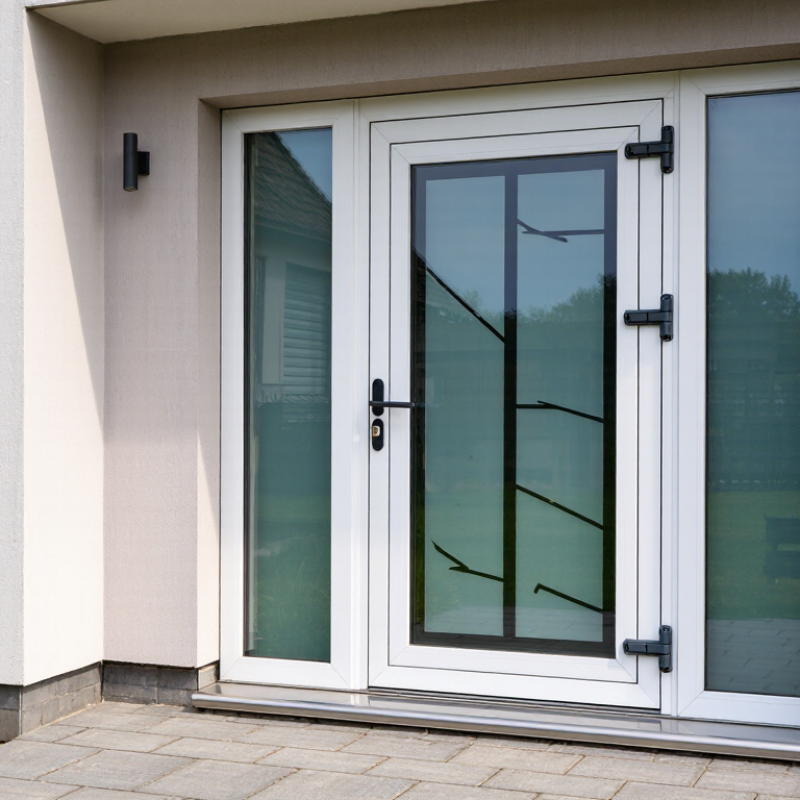
How to Choose UPVC Doors in 2026?

Identify Your Needs and the Right UPVC Door Style

How to Choose UPVC Doors in 2026?

Identify Your Needs and the Right UPVC Door Style

Start by considering how the door will work every day. A busy family entrance may need a durable surface, secure multi-point locking, and space for muddy shoes. For a rear doorway, wide glazing can bring daylight into a dim kitchen, while a frosted panel offers more privacy. Measure the opening carefully, including the frame, threshold, and available swing space.

Measure twice.

The right style depends on the room and the way people move through it. A hinged door suits most entrances, but check that it will not hit furniture or block a narrow path. Sliding or folding designs can open up a patio, though their tracks need regular cleaning. Sidelights can brighten a hallway, but they may reveal more of the interior than expected.

Looks matter too.

Check the door’s stated insulation performance, glazing specification, weather seals, and locking details rather than relying on appearance alone. Ask for measurements and product specifications in writing, and have the opening assessed if the walls or floor are uneven. A showroom sample can feel solid yet say little about how a door will fit your home.

That part is easy to underestimate.

Consider who will install it and how the threshold will manage rain, drafts, and daily foot traffic.

Compare Materials, Glazing, and Energy-Efficiency Ratings

When choosing a UPVC door, compare the frame, glazing, and certified ratings—not just the quoted price. Multi-chambered profiles can slow heat transfer, while steel reinforcement adds strength but may create a thermal bridge. Ask for the full door specification. A cutaway sample helps reveal what the brochure leaves out.

Glazing matters most on doors with large glass panels. Double glazing is a practical baseline; low-emissivity coatings and argon-filled gaps can further reduce heat transfer. The U.S. Department of Energy estimates that windows account for about 25–30% of residential heating and cooling energy use. That figure is not a door-specific estimate, but it shows why glazed areas deserve attention. Look for warm-edge spacers and sealed units, too. Small details count.

Check the National Fenestration Rating Council label for whole-product U-factor and solar heat gain coefficient (SHGC). Lower U-factor generally means better insulation; the useful SHGC depends on climate and sun exposure. Air-leakage data is worth comparing, especially for windy sites. I would be cautious about choosing by one headline rating alone. A highly rated door can still feel cold if its frame, installation, or perimeter seals are poor. Even careful comparisons have limits.

Assess Security Features, Durability, and Maintenance

When choosing a UPVC door, assess the whole security system, not just the lock. Look for a multipoint locking mechanism that engages at several points along the frame. Check that hinges are secure and difficult to access from outside. Small details matter. If the door includes glass, ask whether the glazing and its fixing method suit your security needs. A strong door can still perform poorly if it is fitted out of square. Ask the installer how the frame will be anchored and whether the lock will be adjusted after fitting.

Durability depends on materials, exposure, and care. Prolonged sun can fade some finishes, while rain and temperature changes may affect seals and moving parts. Inspect weather seals for gaps, and check that the door closes without scraping. It should not need a hard shove. Clean the surface with mild soapy water, and avoid abrasive pads that can mark it. Keep the locking points free of grit; use a suitable lubricant if the manufacturer recommends one. No UPVC door is maintenance-free. Appearance alone is a poor guide, and even a well-made door can need hinge or lock adjustments over time.

How to Choose UPVC Doors in 2026: Security, Durability & Maintenance

Compare certified security resistance classes when assessing a complete doorset—not just the lock. The chart shows the net manual-attack time associated with EN 1627 resistance classes RC2–RC6, tested under EN 1630.

What to check: Look for certification covering the complete doorset, including its frame, locking hardware and glazing, and ensure it is installed as specified. For durability, check the warranty and care instructions for the specific door. Routine care commonly includes cleaning the frame and checking hinges, seals and locking points; follow the manufacturer’s maintenance guidance.

Check Measurements, Installation Standards, and Building Rules

How to Choose UPVC Doors in 2026?

Accurate measurements matter more than the size printed on an old door. Measure the opening at the top, middle, and bottom, then check the height on both sides. Compare the diagonals too; an uneven frame can leave a narrow gap that is hard to seal. Include the sill and finished floor level. I still double-check these details, because a few millimetres can complicate installation.

Installation standards and building rules depend on your location and project type. Before ordering, check current local requirements for thermal performance, safety glazing, ventilation, and accessible thresholds. Ask the installer how the frame will be fixed, sealed, and checked for level. The U.S. Energy Information Administration’s 2020 Residential Energy Consumption Survey reported that space heating used about 42% of household energy. That figure is not door-specific, but it shows why draught control deserves attention.

Look for certified performance information, not just claims such as “energy efficient.” The National Fenestration Rating Council explains how product ratings report U-factor and other performance measures; a lower U-factor generally indicates better insulation. Check that the rating applies to the complete door, including its glazing where relevant. It is tempting to trust a familiar opening. Sometimes that is the mistake. Ask for written confirmation that the chosen size and installation method meet applicable rules.

How to Choose UPVC Doors in 2026? — Check Measurements, Installation Standards, and Building Rules

Use this checklist when comparing UPVC (unplasticized polyvinyl chloride) doors. Building requirements vary by location and project, so confirm applicable rules with your local building-control authority and the door supplier before ordering.

Check What to measure or verify Practical method Decision point Standards and building-rule notes
Opening width Measure the structural opening in at least three places: top, middle, and bottom. Record each measurement in millimetres. Use the smallest reading when discussing the opening with the supplier, and check whether trims or finishes affect the measurement. Do not assume a nominal or “standard” door size will fit. Ask the supplier to confirm the required frame size and fitting clearance for the specific product. Measurement and fitting allowances depend on the door system and the existing opening; there is no single clearance that applies to every product.
Opening height Measure from the intended finished floor level to the head of the opening at the left, centre, and right. Note the floor covering, threshold, and any planned floor changes. Keep the readings and measurement locations together. Confirm the ordered frame height accounts for the threshold and the actual finished-floor level. Threshold height and accessibility requirements depend on the building’s use and local rules.
Squareness and condition Check whether the opening is square, plumb, level, and structurally sound. Compare the two diagonal measurements and use a spirit level or suitable measuring tool to check the sides and head. Photograph irregularities or damaged masonry. Ask the installer how out-of-square openings, loose material, or uneven surfaces will be corrected before installation. Do not treat a visual check as a substitute for the installer’s assessment of the substrate and fixing method.
Door configuration and handing Confirm single or double doors, opening direction, hinge side, glazing layout, and any side or top panels. Describe the view direction used to identify handing, and mark the desired swing on a simple drawing of the opening. Check that the chosen swing does not conflict with steps, walls, paths, or the space needed to open the door safely. Escape routes, accessible routes, and fire-safety requirements may affect which configuration is suitable.
Threshold and access Check the threshold’s height, profile, weather protection, and transition to the inside and outside surfaces. Ask for the threshold detail drawing and check how it will meet the finished floor and external paving. Choose a threshold that balances weather sealing with safe, convenient access for the intended users. Accessibility limits are jurisdiction- and project-specific. For example, England’s Approved Document M includes threshold guidance for relevant situations; confirm the applicable edition and scope locally.
Product performance Request declared thermal, weather, air-leakage, water-resistance, and wind-resistance performance where applicable. Compare documentation for the complete doorset, not only the UPVC frame or glass. Check that the stated configuration matches the door being quoted. Match the documented performance to the exposure, building type, and requirements of the project. EN 14351-1 is a European product standard for windows and external pedestrian doorsets. Applicable conformity and regulatory requirements depend on the market.
Security and hardware Review the lock, cylinder, hinges, keeps, glazing specification, and any security certification offered. Ask for written details of the supplied hardware and whether the security rating applies to the complete doorset or only individual components. Confirm that the hardware is suitable for the door configuration and that keys, access needs, and maintenance are considered. Security requirements and accepted certification schemes vary by location, insurer, and building type.
Installation method Check how the frame will be supported, fixed, sealed, insulated, and connected to the surrounding construction. Request a written installation scope, including preparation of the opening, perimeter sealing, threshold detailing, and finishing work. Agree who is responsible for structural repairs, internal and external making-good, and disposal of the old door. Installation must follow the product manufacturer’s instructions and applicable local building requirements. Ask whether the installer’s work requires inspection or certification.
Drainage and weather sealing Check that drainage paths, drainage outlets, gaskets, and external seals are correctly detailed. Ask the installer to explain how water will drain away and how the perimeter joint will accommodate the door and wall materials. Ensure drainage openings are not blocked by sealant, finishes, or later work. Use the door manufacturer’s drainage and sealing details; do not rely on a generic sealing approach for every frame design.
Building rules and permissions Check whether the work is subject to building regulations, planning controls, conservation restrictions, or fire-safety provisions. Contact the relevant local authority or qualified professional before ordering, especially for flats, shared buildings, listed properties, and protected areas. Keep any required approvals, product documents, and completion records with the project paperwork. Rules differ by country, region, property type, and the scope of work. Do not assume that replacing an existing door is automatically exempt.
Quote, warranty, and handover Compare the exact product specification, installation work, exclusions, warranty terms, and aftercare arrangements. Check that the quote identifies the dimensions, configuration, glazing, threshold, hardware, finishes, and any required approvals. Before accepting the work, test operation and locking, inspect seals and finishes, and obtain care instructions and relevant certificates. Warranty coverage and required maintenance are set by the supplier or manufacturer; review the written terms rather than relying on verbal assurances.

Evaluate Suppliers, Warranties, and Total Costs

How to Choose UPVC Doors in 2026?

Evaluate Suppliers, Warranties, and Total Costs

Compare suppliers using the same written specification: door dimensions, glazing, locking hardware, threshold, removal, and installation. Ask for the product’s tested thermal rating and the installer’s credentials, then check whether the figures apply to the complete door or only its panel. The IEA’s Energy Efficiency 2023 report says buildings account for about 30% of global final energy consumption. That is useful context, not a promise that one UPVC door will cut your bills by a set amount. Your result depends on the whole home, installation quality, and local climate.

Read warranty terms before comparing prices. Check what is covered, for how long, and who pays for labor, replacement parts, or call-outs. Look for exclusions covering seals, hardware, discoloration, and damage from poor installation. A long warranty can still be weak if the remedy is unclear. Request an itemized quote that includes delivery, old-door disposal, finishing, and any threshold adjustments. Small extras add up.

Tips: Get two or three comparable quotes. Photograph the existing frame and threshold before measuring. Ask the supplier to confirm measurements in writing. Keep the warranty and installation records together. Don’t choose on price alone; I’d still question any quote that leaves fitting details vague.