How to Source Affordable Doors for Global Projects?
Sourcing affordable doors for global projects requires more than finding the lowest factory quotation. It demands careful control of quality, documentation, logistics, and local compliance. In practice, buyers should compare door cores, surface finishes, hardware, fire ratings, and moisture resistance before comparing prices. Details matter. A hollow-core interior door may suit a dry residential project, while a coastal hotel may need sealed edges and corrosion-resistant fittings. These differences can change the final cost significantly.
Reliable sourcing begins with qualified suppliers and clear technical schedules. Request product samples, test reports, factory photographs, references, and written warranty terms. Confirm whether reported certifications apply to the exact door model, not merely a similar product. Check production capacity, packaging methods, lead times, and replacement procedures. The cheapest offer can become expensive after damage, delays, or rejected inspections. Landed cost should include manufacturing, inspection, freight, duties, storage, and installation support. That sounds simple, but many project budgets miss small items.
A practical sourcing plan also respects the building codes and import requirements of each destination. Local professionals should review fire, accessibility, safety, and environmental requirements before purchase. Supplier audits can reveal useful details, such as poorly protected corners or inconsistent labeling. Still, no audit guarantees a perfect shipment. I have found that honest communication about limitations often prevents larger problems later. Buyers should keep room for contingency costs and recheck specifications after design changes. Affordable doors are achievable, but affordability must remain connected to performance, traceability, and dependable delivery.
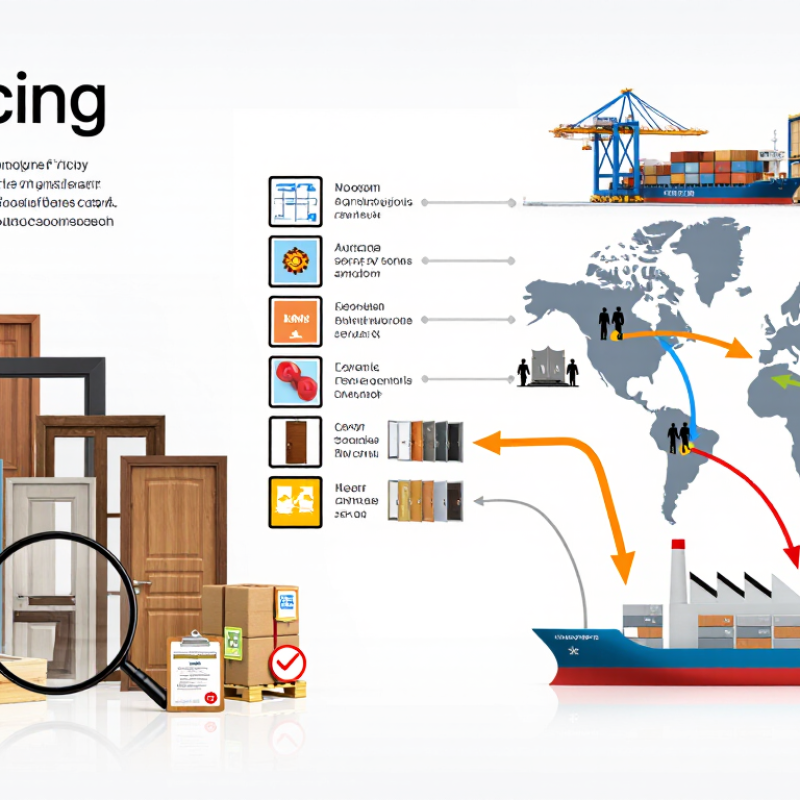
Define Project Requirements and Door Specifications
When I source doors for a global project, I begin with a room-by-room schedule, not a supplier catalogue. Each opening needs a clear identity, location, and intended use. Record the finished wall thickness, opening width, height, and swing direction. Include frame dimensions.
Small omissions create costly revisions.
Specify the core performance requirements before comparing prices. Consider fire resistance, acoustic control, thermal performance, moisture exposure, security, and accessibility. A bathroom door near a coastal site may need corrosion-resistant hardware and sealed edges. A hospital corridor may require smooth, cleanable surfaces. Door ratings must match local building codes and approved testing methods. A certificate from one market may not satisfy another authority. Request complete test reports, installation limits, and maintenance instructions.
The specification should also define material, finish, core type, glazing, hinges, locks, seals, and packing method. Confirm whether the door arrives assembled or flat-packed. This affects labor, storage, and damage risk. I once accepted a low unit price without checking the frame profile. It later required custom adjustments on site. The saving disappeared. That mistake still influences my procurement reviews. Ask for a sample, a shop drawing, and a mock-up when possible. Check color consistency under site lighting. Confirm replacement parts and realistic lead times. A detailed specification may feel slow, but it gives suppliers the same target and makes affordable comparisons more reliable.
Identify Reliable International Door Suppliers
How to Source Affordable Doors for Global Projects?
Identify Reliable International Door Suppliers
Affordable sourcing begins with supplier reliability, not the lowest quotation. In international projects, I compare production experience, export records, and documented quality procedures. A supplier should explain core materials, moisture resistance, hardware options, and replacement policies in plain language. Ask for recent project references in climates similar to yours. Photos help. Dated inspection reports and verifiable contacts provide stronger evidence. Check capacity against your schedule; a small workshop may offer care, yet struggle with 2,000 doors.
Request a sample door before signing a large order. Inspect its frame joints, surface finish, hinge alignment, lock preparation, and packaging. Measure everything. A sample can expose an incorrect swing direction or a finish that changes under daylight. Independent pre-shipment inspections are useful, especially when the factory is overseas. Confirm testing documents, fire ratings, and dimensions against applicable local building requirements. Do not accept copied certificates or vague claims. A reliable supplier welcomes specific questions and records agreed tolerances.
Price comparisons should include crating, inland transport, duties, insurance, and likely replacement costs. Clarify payment stages, lead times, warranty handling, and communication hours before production begins. Use a detailed purchase specification with drawings and approval checkpoints. I once trusted a polished catalog too quickly; the delivered doors were sound, but the cartons were too weak for a humid port. That mistake changed my process. Now I test packaging, request moisture controls, and keep written approvals for every revision.
Compare Pricing, Materials, Certifications, and Shipping Terms
How to Source Affordable Doors for Global Projects?
Affordable doors require more than a low unit price. Compare equivalent specifications before requesting quotations. A hollow-core interior door may cost less than a solid-core model, but it can offer weaker sound control and impact resistance. Check the leaf thickness, frame material, surface finish, hardware, and packaging. For humid regions, moisture-resistant cores and sealed edges deserve special attention. A cheaper door can become expensive after swelling, repainting, or replacement.
Ask suppliers to separate product cost, tooling, packing, and delivery charges. Compare quotations using the same shipping term, such as FOB or CIF. Freight rates can change significantly with container size, port congestion, and seasonal demand. Confirm carton dimensions and pallet strength. A damaged corner at arrival creates delays that a spreadsheet may miss. Request production samples when possible. Photos are useful, but they do not reveal weight or closing performance.
Certifications should match the destination and project type. Verify fire ratings, acoustic test results, formaldehyde limits, and material declarations through current documents. Check the testing laboratory, report number, product scope, and validity date. Do not accept a certificate without confirming that it covers the quoted door assembly. This step is often rushed. That is a mistake. Keep a comparison sheet with price, material, certification, lead time, warranty terms, and shipping responsibility. I have found that the “cheapest” offer can lose its advantage after compliance checks and inland delivery costs.
Verify Samples, Quality Standards, and Supplier Capabilities
Sourcing affordable doors for global projects requires more than comparing unit prices. A low quotation may exclude frames, hardware, packaging, or testing. Request a complete sample set, including the slab, frame corner, hinges, seals, and finish. Inspect it under daylight and warehouse lighting. Check gaps with a feeler gauge. Operate the lock repeatedly. Small faults often appear after ten cycles.
Ask for documented quality standards that match the project location and building use. Confirm fire, acoustic, moisture, and security requirements with the project consultant. Test reports should identify the exact door construction, not merely a similar model. Review production dates, laboratory names, and sample dimensions. Documents can look convincing. Details matter.
Supplier capability deserves a physical and practical review. Request recent production photographs, process records, and a live video walk-through. Check whether the factory controls timber moisture, adhesive application, coating thickness, and final inspection. Ask how defects are recorded and corrected. I once accepted a polished sample before checking packaging. Several corners arrived damaged. That mistake changed my inspection checklist. A supplier may produce excellent doors but lack export packing, stable lead times, or replacement procedures. Confirm monthly capacity, container loading methods, spare-part support, and communication during delays. Do not rely on promises alone. Use a small pilot order when possible, and keep approval samples sealed for comparison during mass production.
Plan Orders, Logistics, Customs, and Installation Support
How to Source Affordable Doors for Global Projects?
Affordable doors begin with disciplined order planning, not the lowest unit price. Create a door schedule showing dimensions, swing direction, fire rating, finish, hardware, and room location. Group repeated sizes to reduce cutting, packing, and inspection costs. Confirm approved samples before production starts.
Small changes later can become expensive.
Plan shipping around the construction sequence. A mixed container may reduce freight costs, but poor packing can damage corners and frames. Use moisture barriers, reinforced pallets, and clear labels on every package. Ask for production photos and inspection records before dispatch. Customs paperwork should match the invoice, packing list, product description, and declared quantities. Check local import requirements early, because a missing document can hold a shipment for days.
Installation support must be practical. Provide illustrated instructions, opening tolerances, hardware schedules, and short video guidance when possible. A local supervisor can identify wall problems before doors arrive. We once underestimated storage conditions on a humid site. Several cartons needed extra protection, and our original schedule was too optimistic. That experience changed our process. Now, we confirm warehouse ventilation, delivery access, lifting equipment, and installer availability before booking production. Keep spare hinges, seals, and fasteners nearby. They are inexpensive insurance.
Good sourcing is not only about buying doors cheaply. It is about controlling preventable delays.