How to Choose UPVC Windows and Doors for Global Projects

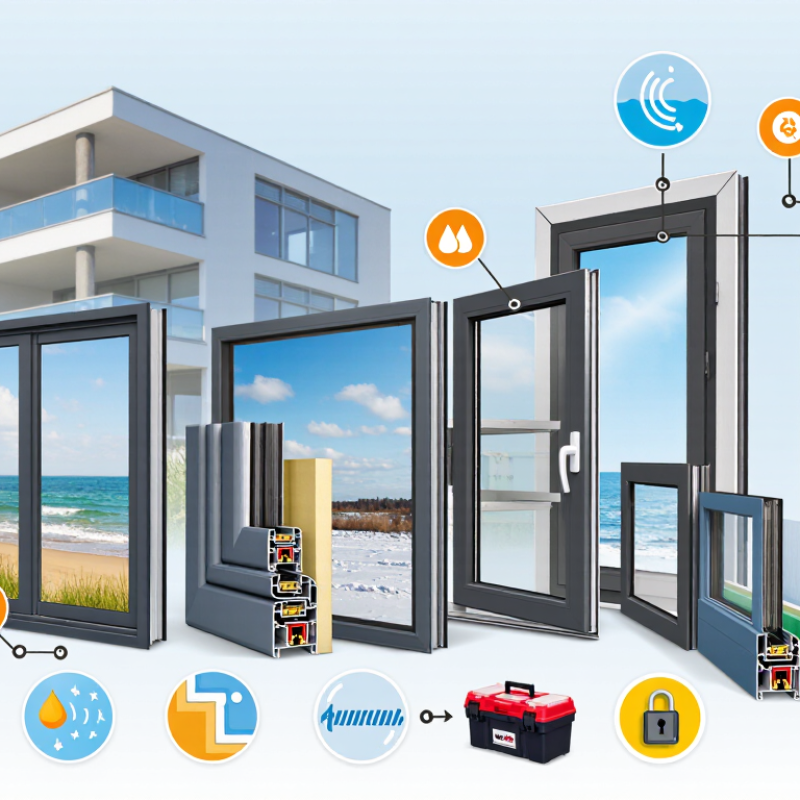
Choosing upvc windows and doors for global projects requires more than comparing prices and attractive brochures. Product performance changes with climate, building use, installation quality, and local requirements. A coastal hotel may need corrosion-resistant hardware and reinforced profiles. A residential project in a cold region may require stronger insulation and carefully selected glazing. In hot, sunny areas, solar-control glass can reduce indoor heat and energy demand. Small details matter, including drainage paths, gasket quality, locking points, and frame reinforcement.

Experienced project teams usually begin with performance requirements, not product appearance. They review wind-load calculations, thermal values, acoustic needs, water resistance, and expected maintenance. Independent test reports can provide useful evidence, but they should match the proposed profile, glass, hardware, and installation method. A certificate alone does not guarantee good site performance. This is often overlooked.

Reliable suppliers should explain production tolerances, quality-control procedures, packaging methods, and replacement support. Factory samples should be checked against approved drawings before mass production. On site, installers must protect frames from cement, impact, and poor alignment. Even excellent upvc windows and doors can leak when fitted carelessly. Global projects also require clear communication about dimensions, delivery schedules, warranties, and compliance with applicable local building standards. There is no universal solution. A lower quote may seem efficient, yet weaker hardware or limited after-sales support can create expensive problems later. Careful comparison, documented testing, and honest technical review lead to safer and more dependable decisions.

How to Choose UPVC Windows and Doors for Global Projects

Define Project Requirements, Climate, and Site Conditions

Choosing UPVC windows and doors for a global project begins with a written performance brief, not a catalogue image. Define opening sizes, ventilation needs, security levels, acoustic targets, fire separation, accessibility, service life, and replacement plans. The brief should specify U-values, solar heat-gain limits, air leakage, water tightness, and wind resistance. These figures must match local codes and wall construction. A strong frame cannot rescue a poorly detailed sill.

Climate and site conditions change the decision. The IEA’s Energy Efficiency 2023 report states that building operations use about 30% of global final energy and produce roughly 26% of energy-related emissions. Therefore, test whole-window performance, including glass, frame, spacer, and installation. In hot regions, control solar gain and provide shading. In cold zones, reduce heat loss and check interior surface temperatures. The WMO’s State of the Global Climate 2023 reported 2023 as the warmest year recorded, at about 1.45°C above the pre-industrial average. That does not replace local weather files. It supports conservative overheating checks.

At the site, record altitude, coastal salt exposure, dust, driving rain, seasonal humidity, wind direction, and traffic noise. Use project-specific wind calculations, not a generic global rating. Inspect drainage paths and sill slopes before ordering. Site surveys often expose uneven masonry and unexpected tolerances. We should admit one weakness: laboratory results may not predict careless installation. Require mock-up testing, installer training, batch inspections, and photographic evidence. Recheck assumptions after one season. They may be wrong.

Compare UPVC Profiles, Glazing, Hardware, and Reinforcement

Choosing UPVC windows and doors for global projects requires more than comparing prices. Climate, building height, opening size, and installation quality all affect performance. In coastal areas, profiles need reliable drainage and resistance to humid, salty air. In cold regions, deeper chambers can reduce heat transfer. A thicker profile is not automatically stronger. Review wall thickness, chamber design, gasket seats, and frame stability. Color samples alone can mislead.

Glazing should match the building’s exposure and energy targets. Double glazing may suit moderate climates, while triple glazing can improve comfort in colder zones. Low-emissivity glass helps control heat, but it must be selected with the correct solar-control value. Warm-edge spacers can reduce condensation around the glass perimeter. Hardware also deserves close comparison. Multi-point locks, adjustable hinges, and corrosion-resistant components support daily operation. Small details matter. I once assumed heavier hardware guaranteed better security, but poor adjustment caused uneven closing.

Reinforcement is critical for wide sashes, tall doors, and windy locations. Compare steel thickness, shape, galvanization, and how firmly it connects at corners. Reinforcement should work with the profile, not merely sit inside it. Ask for test reports covering air tightness, water resistance, wind load, and repeated operation. These tests improve reliability, though they cannot replace careful site installation. A strong window can underperform when anchors are poorly spaced or drainage paths are blocked. Some project decisions remain imperfect, especially when budgets and thermal targets conflict. That trade-off should be recorded clearly before production.

Evaluate Energy, Acoustic, Security, and Weather Performance

Choosing uPVC windows and doors for global projects requires more than comparing frame prices. The International Energy Agency’s 2023 buildings report states that buildings use about 30% of global final energy. The U.S. Department of Energy also estimates that windows can cause 25–30% of residential heating and cooling energy use. Specify low-U glazing, warm-edge spacers, and tested airtight seals. Solar control matters in hot climates. However, a low U-value alone can mislead.

Acoustic performance needs local evidence. The European Environment Agency reported that over 100 million Europeans face harmful road traffic noise. Request laboratory sound reduction values, such as Rw or STC, and check the actual glass thickness. Security should include multi-point locking, reinforced corners, and tested resistance classifications under EN 1627. Weather testing is equally practical. Check air permeability, watertightness, and wind resistance under EN 12207, EN 12208, and EN 12210. Installation gaps often weaken excellent products. This part is easy to underestimate.

Tips: Match specifications to the site, not the brochure. Ask for complete test reports, laboratory conditions, and installation limits. Inspect drainage paths after fitting. On real projects, small alignment errors can create drafts and water entry. I have found that “global standard” is not always globally suitable. Coastal salt, intense sunlight, dust, and tropical rain may require different decisions. Record the climate zone, exposure height, opening size, and maintenance plan before approving samples. Shortcuts rarely stay cheap.

Verify Regional Standards, Certifications, and Supplier Reliability

How to Choose UPVC Windows and Doors for Global Projects

Regional standards should guide every UPVC window and door specification. A product approved in one market may fail another market’s requirements. Check thermal performance, wind resistance, water tightness, acoustic ratings, and fire behavior. Confirm the required U-value, glazing type, frame class, and hardware grade. Coastal sites need stronger corrosion resistance. Cold regions may require reinforced frames and insulated glazing.

Ask for current certificates, test reports, and factory quality records. Do not accept a certificate without checking its scope, test date, issuing laboratory, and matching product details. The profile, glass, gasket, and hardware must appear in the tested configuration. Small changes can affect performance. This is often overlooked. Local consultants or code authorities can verify whether documents meet regional rules.

Supplier reliability also needs evidence. Request production samples, batch inspection records, packing photographs, and realistic lead times. Review warranty terms carefully, including installation limits and replacement procedures. A capable supplier should explain mold control, color consistency, drainage design, and reinforcement thickness. Visit the factory when possible, or use an independent audit. Video calls help, but they cannot reveal every process weakness. One practical lesson is simple: attractive samples do not prove stable production. Ask how defects are recorded and corrected. Leave room for delays, because global shipping and approval cycles rarely follow the original schedule.

How to Choose UPVC Windows and Doors for Global Projects

Verify regional standards, certifications, and supplier reliability before approving a UPVC window or door system.

The chart shows the publication or revision year of commonly referenced regional product standards. Always confirm the current edition, local building-code requirements, test reports, and certification scope before procurement.

Regional compliance

Match air permeability, watertightness, wind resistance, thermal performance, safety glass, and fire requirements to the project location.

Certification evidence

Request valid laboratory reports, product certificates, factory-audit records, test configurations, and traceable certification numbers.

Supplier reliability

Check production capacity, quality-control procedures, warranty terms, replacement-part availability, export experience, and verified project references.

Reference standards shown: EN 14351-1, AAMA/WDMA/CSA 101/I.S.2/A440, AS 2047, GB/T 8478, and JIS A 4706. Edition status should be verified with the relevant standards body or project authority.

Plan Customization, Logistics, Installation, and Maintenance

How to Choose UPVC Windows and Doors for Global Projects

Plan Customization, Logistics, Installation, and Maintenance

Global UPVC projects need more than attractive profiles and competitive prices. Customization should reflect climate, building orientation, local codes, and room use. In hot regions, low-emissivity glazing and solar control can reduce cooling demand. In colder zones, insulated frames and carefully selected glass are more important. The IEA’s 2023 Global Status Report states that buildings consume about 30% of global final energy. Small envelope decisions matter. The plan may still be wrong.

Confirm dimensions, opening direction, drainage paths, reinforcement, hardware, and glazing before production. Include wind loads and coastal corrosion risks. A useful technical reference is ISO 10077, which supports reliable thermal-transmittance calculations for windows and doors. Drawings should show tolerances, not only finished sizes. That detail prevents expensive site adjustments.

Logistics deserves equal attention. The World Bank’s 2023 Logistics Performance Index highlights reliability, tracking, and timeliness. Use moisture-resistant packaging, corner protection, readable labels, and shipment photographs. Separate glass units when necessary. Installation teams should verify plumb, level, anchoring, perimeter sealing, and drainage channels. Local installers need written procedures and practical training. A common mistake is blaming the product for poor installation. Maintenance plans should schedule seal, gasket, drainage, hardware, and frame inspections at least annually. Keep replacement parts identified by opening and location. Records are often forgotten. That weakens long-term accountability. UNEP’s 2023 buildings report reinforces the value of reducing operational energy, but performance can decline when seals remain damaged or drainage is blocked.

How to Choose UPVC Windows and Doors for Global Projects - Plan Customization, Logistics, Installation, and Maintenance
Project Stage Key Decision Recommended Technical Basis Customization Inputs Logistics Planning Installation Requirements Maintenance Guidance Practical Control Data
1. Climate and Site Assessment Match the window and door system to the local climate, exposure, and building orientation. Review temperature range, solar exposure, wind conditions, rainfall, humidity, coastal salt, and seasonal movement before selecting profiles and glazing. Country, city, altitude, façade orientation, building height, opening size, coastal distance, and local building-code requirements. Confirm whether products will be shipped in a humid, hot, cold, or salt-air environment and define suitable protective packaging. Prepare the opening so it is structurally sound, square, plumb, dry, and free from loose mortar or debris. Use weather-appropriate cleaning and inspection intervals, especially in coastal or high-pollution areas. Site survey before quotation
Record local design wind pressure and drainage conditions.
2. Performance Specification Set measurable requirements instead of selecting products by appearance alone. Specify air permeability, watertightness, wind resistance, thermal transmittance, acoustic performance, safety, and operating-cycle requirements. Target U-value, glass configuration, opening type, frame depth, reinforcement, hardware position, and required test classification. Protect finished surfaces and maintain product identification so tested configurations can be matched to delivered units. Install according to the approved system details; performance depends on the complete window, joint, glass, hardware, and installation assembly. Compare periodic inspection results with the original performance requirements and project acceptance records. Use tested assemblies
Do not substitute glass, seals, hardware, or reinforcement without technical approval.
3. Profile and Material Selection Choose a profile system with sufficient geometry, reinforcement space, drainage, and service support. Common UPVC systems use multi-chamber profiles, steel or other approved reinforcement where required, replaceable gaskets, and designed drainage paths. Frame depth, sash configuration, color, surface finish, reinforcement thickness, glazing bead, sill design, and compatible accessories. Separate long members, frames, glass, and hardware where practical; prevent bending, abrasion, water accumulation, and direct sunlight during storage. Maintain required frame clearances and avoid drilling through drainage channels or reinforcement zones unless permitted by the system design. Clean profiles with mild soapy water; avoid abrasive pads, solvents, and unapproved chemical cleaners. Replaceable components
Confirm availability of gaskets, rollers, handles, locks, and drainage covers for the expected service period.
4. Glass and Energy Planning Balance thermal insulation, solar control, daylight, safety, and sound reduction. Double glazing is widely used; low-emissivity coatings, inert-gas-filled cavities, laminated glass, toughened glass, and warm-edge spacers may be selected according to the project need. Glass thickness, cavity width, coating position, solar factor, visible transmittance, acoustic target, safety classification, and privacy requirement. Use edge protection, vertical storage, separators, and clear labeling. Avoid storing glass flat for extended periods unless the handling procedure allows it. Use compatible setting blocks and packers; prevent glass contact with the frame and avoid blocking drainage routes. Inspect for seal failure, cracked panes, damaged coatings, and condensation patterns; replace failed insulated glass units rather than attempting field resealing. Typical priority
Cold climates: lower U-value; hot climates: control solar gain; noisy sites: prioritize acoustic glazing.
5. Door and Hardware Configuration Select opening styles and hardware according to traffic, security, accessibility, and emergency-use requirements. Consider casement, tilt-and-turn, sliding, lift-and-slide, hinged, or entrance-door configurations. Hardware must suit sash weight, cycle frequency, and security requirements. Threshold height, accessibility, lock type, hinge load, handle height, restrictors, child safety, panic or emergency exit function, and corrosion resistance. Pack hardware separately or secure it against movement; include installation tools, adjustment keys, spare parts, and illustrated instructions. Check sash alignment, locking engagement, threshold support, handle operation, and drainage after installation and final adjustment. Lubricate approved moving parts periodically, tighten accessible fasteners, and replace worn rollers, seals, or cylinders promptly. High-use areas
Specify tested cycle performance and corrosion-resistant hardware where humidity or salt exposure is high.
6. Dimensional Survey and Shop Drawings Control dimensions before fabrication to reduce site cutting, delays, and installation errors. Record width, height, diagonals, reveal depth, sill level, structural opening, finished-floor level, and interface with waterproofing and insulation. Approved elevation drawings, opening schedule, tolerance limits, interface details, window identification codes, and revision status. Use the same unit codes on drawings, labels, packing lists, and delivery documents to simplify receiving and installation sequencing. Allow for the approved installation joint and avoid forcing a frame into an undersized or distorted opening. Retain as-built dimensions and replacement-unit information for future maintenance or refurbishment. Two-point verification
Check critical openings once before fabrication and again before shipment or installation.
7. Packaging and International Logistics Protect the products through handling, customs clearance, inland transport, and temporary storage. Use corner protection, separators, moisture-resistant wrapping where appropriate, stable pallets or stillages, and visible handling instructions. Shipping method, delivery sequence, pallet dimensions, maximum handling weight, unloading equipment, insurance, and destination documentation. Keep products upright where required, distribute weight evenly, prevent load movement, and avoid prolonged exposure to rain, heat, and direct sunlight. Inspect packaging and products on arrival; photograph damage, record shortages, and quarantine visibly damaged units before installation. Store products off the ground in a ventilated, secure location and follow the system supplier's maximum storage recommendations. Receiving checklist
Verify quantity, unit codes, glass condition, accessories, documents, and visible frame damage.
8. Installation and Sealing Create a durable connection between the frame, wall, insulation, and exterior weather barrier. Use a continuous installation concept: weather protection outside, insulation in the joint, and controlled air or vapor sealing on the interior side where required by the wall design. Wall type, sill detail, fixing method, anchor spacing, sealant compatibility, insulation material, cavity barriers, and façade drainage strategy. Deliver installation accessories with the correct unit or installation zone to avoid substitutions with incompatible tapes, foams, anchors, or sealants. Fix through approved locations, support the frame correctly, maintain joint width, seal continuously, and keep weep holes open. Inspect sealant joints, drainage outlets, perimeter finishes, and signs of water ingress during scheduled building inspections. Critical quality points
Level, plumb, square, fixing, packer position, joint continuity, drainage, and sash adjustment.
9. Site Quality Control Verify workmanship before concealment and handover. Use documented inspections for dimensions, fixing, glazing, seals, operation, drainage, surface condition, and interface with adjacent construction. Inspection and test plan, hold points, sample-unit approval, nonconformance process, photographic records, and final acceptance criteria. Track damaged or missing items separately from accepted stock and maintain a replacement schedule for rejected units. Operate every sash and door leaf, test locks and restrictors, confirm clearances, and check for air or water paths at visible joints. Keep inspection records with the building operation manual and identify the responsible maintenance party. Sample testing
Use field water checks or other approved verification methods where project risk and local practice require them.
10. Handover Documentation Provide information that allows the owner and local service team to operate and maintain the installation. Include product schedules, approved drawings, glass data, hardware instructions, cleaning guidance, warranties, test evidence, and spare-part references. Local language requirements, emergency contacts, maintenance responsibility matrix, asset codes, replacement procedures, and training needs. Pack manuals and spare parts in a clearly marked, dry location; maintain digital copies for remote project teams. Complete a final snagging inspection and obtain sign-off after all adjustments, repairs, protective-film removal, and cleaning are finished. Define inspection frequency, cleaning methods, lubrication points, adjustment procedures, and escalation contacts. Useful handover set
As-built schedule, care manual, spare-parts list, inspection forms, and warranty conditions.
11. Routine Maintenance Preserve weather performance, safe operation, appearance, and service life. Clean frames and glass with non-abrasive products, clear drainage paths, inspect seals, and adjust hardware when operation becomes stiff or misaligned. Exposure level, occupancy intensity, cleaning access, local dust or salt conditions, security requirements, and building management procedures. Maintain a small, documented stock of compatible gaskets, handles, rollers, locking parts, drainage covers, and approved sealants. Do not modify frames, drill new holes, remove reinforcement, or apply incompatible sealants without technical review. Suggested baseline
Clean at least twice yearly; inspect seals, drainage, and hardware annually, with shorter intervals in severe environments.
Log date, location, defect, action taken, replacement part, and responsible technician for each maintenance event.
12. Long-Term Review Use operational data to improve future global projects and replacement planning. Review complaints, water or air leakage, broken hardware, glass failures, condensation, energy performance, and installation-related defects. Building age, façade zone, defect frequency, climate exposure, occupancy feedback, repair cost, and availability of replacement components. Consolidate spare-part orders where possible and plan replacements around access restrictions, seasonal weather, and local labor availability. Use root-cause analysis to distinguish product defects, installation defects, building movement, misuse, and inadequate maintenance. Update the maintenance plan and component schedule based on actual failure patterns and inspection findings. Review cycle
Conduct a formal performance review after the first operating year and at regular intervals thereafter.